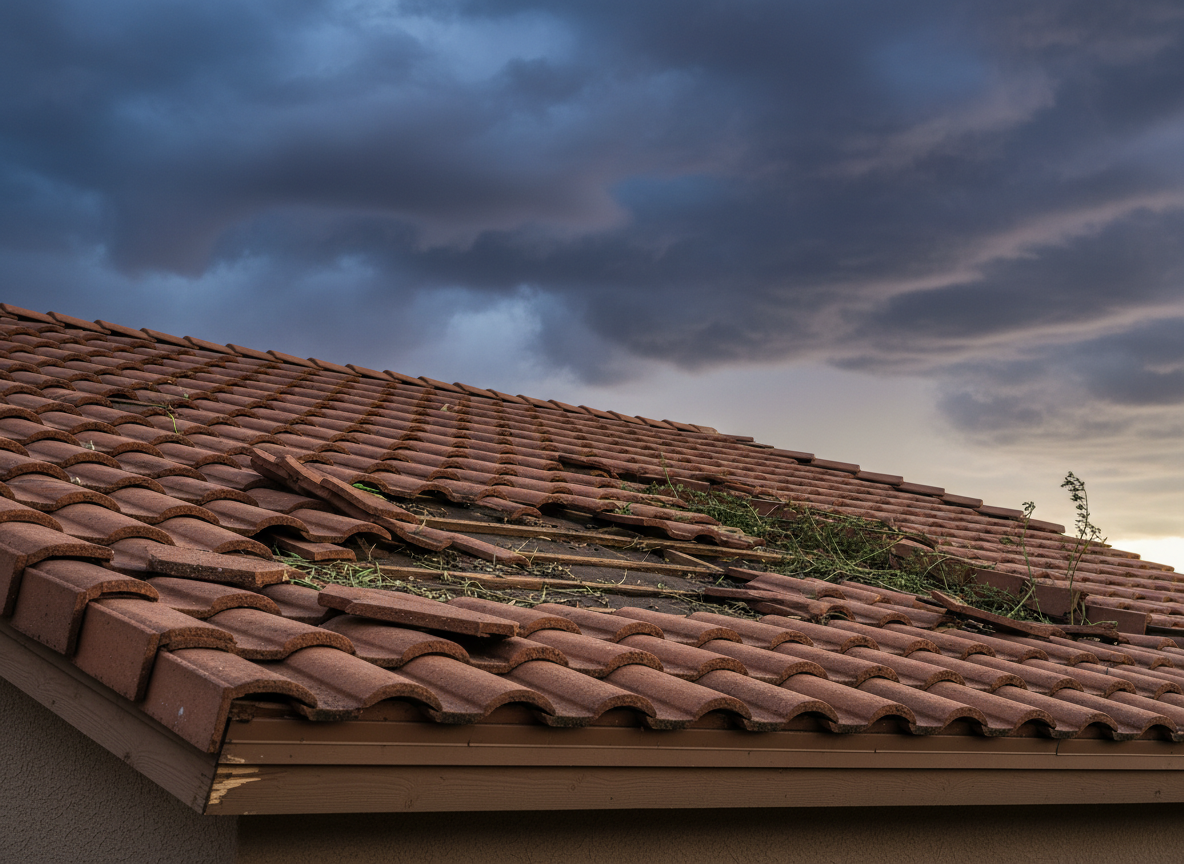
Monsoon Roof Damage in Peoria, AZ
Arizona's monsoon season is the single biggest test your roof faces all year. Wind, rain, hail, and debris arrive together — and the damage is often invisible from the ground.
Greater Phoenix
Replaced & Restored
Accredited Business
GAF Certified
Always Available
Explore a possible monthly payment
If your roof was hit by a monsoon storm, the damage is often not visible from the ground. Displaced tiles, lifted shingles, cracked flashing, and hidden leaks are common after even a single intense cell. Roof Pros Peoria provides free post-monsoon inspections across Greater Phoenix with detailed photo documentation — so you know exactly what the storm did and what to do about it.
Monsoon Roof Damage in Peoria: What's Different Here
Peoria's west-valley position means monsoon storms typically arrive from the west or southwest, often with a leading haboob followed by intense rainfall. Northern Peoria near Lake Pleasant can experience more intense wind due to open terrain, and older roofs are more vulnerable.
Common Causes of Monsoon Roof Damage
Wind
Monsoon wind lifts ridge and hip tiles, strips shingle edges, and pulls flashing. Wind-driven rain then forces water into every opening the wind created.
Heavy rain & drainage overload
Monsoon downpours overwhelm gutters, valleys, and flat-roof drainage. Water that can't drain ponds, backs up, and finds seams and penetrations.
Hail
The most intense monsoon cells carry hail. Hail bruises shingles, cracks tile, and dents metal — damage that may not leak immediately but shortens the roof's remaining life.
Debris & tree impact
Monsoon wind drops tree limbs, palm fronds, and desert brush onto rooflines. Debris in valleys blocks drainage; limbs can crack tiles or puncture membranes.
Hidden leaks
A roof that survived the storm visibly may still have taken damage that only shows up at the next rain — lifted underlayment, shifted flashing, or micro-cracks that admit wind-driven water.
Warning Signs of Monsoon Roof Damage
What We Check in Peoria
When This Becomes Urgent
If the roof deck is exposed, a limb has come through the structure, or water is entering the home, call 480-942-6999 for emergency tarping. Even without active leaking, a post-monsoon inspection before the next storm is strongly recommended.
Related Services
Related Problems
Monsoon Roof Damage in Nearby Areas
Monsoon Roof Damage in Peoria
Monsoon Roof Damage in Peoria — FAQ
My northern Peoria roof was hit by a monsoon — is the damage worse?
My older southern Peoria roof leaked after the monsoon — why now?
How do I know if my roof has monsoon damage?
Should I get my roof inspected after every monsoon?
Concerned about monsoon roof damage in Peoria? Start with a free inspection.