
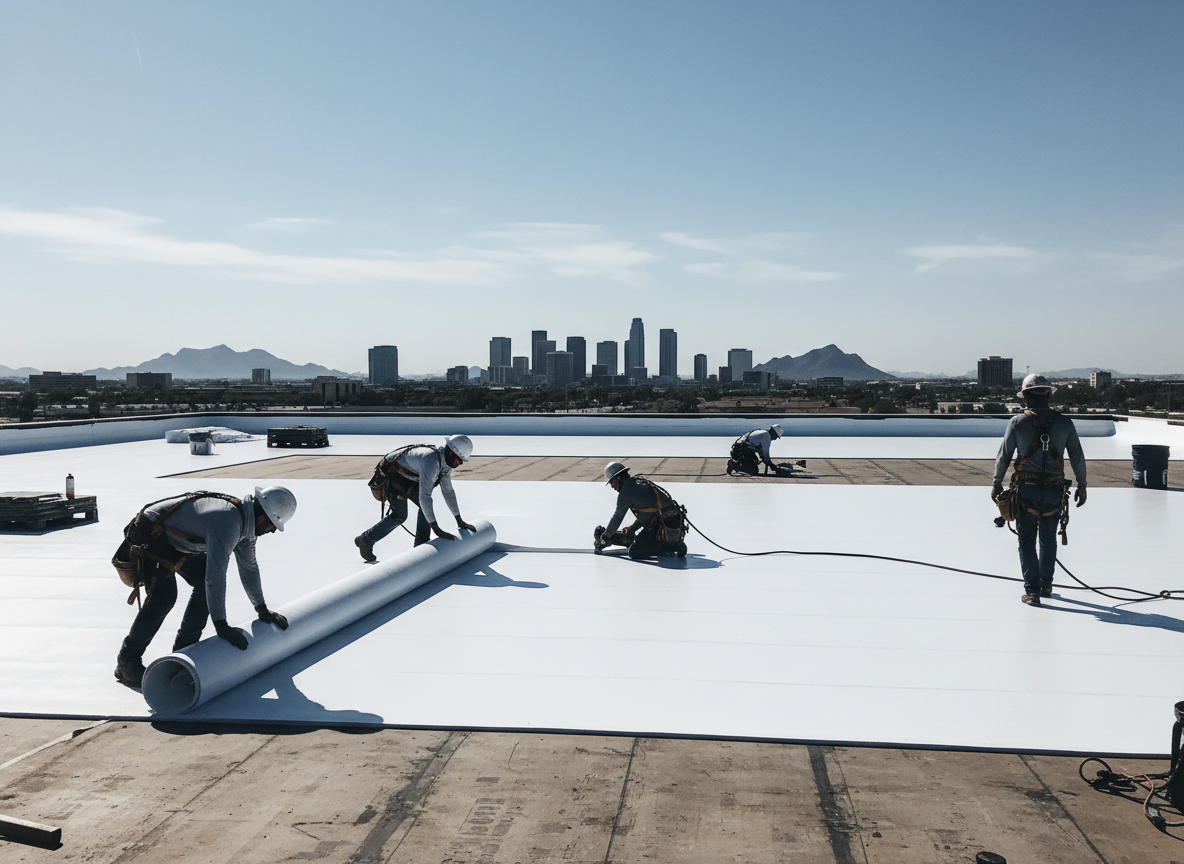
Water Pooling on a Flat Roof in Arizona
Water that sits on a flat roof is not normal and not harmless. Ponding water degrades the membrane, finds seams, and shortens the roof's life — even in a desert climate.
Greater Phoenix
Replaced & Restored
Accredited Business
GAF Certified
Always Available
Explore a possible monthly payment
If water is pooling or ponding on your flat roof, the cause is usually inadequate drainage, a low spot that formed over time, or a membrane that has sagged. Standing water doesn't drain, so it ages the membrane and eventually finds seams and penetrations to enter. Roof Pros Arizona diagnoses why water is sitting and recommends the right fix — drainage correction, membrane repair, coating, or section replacement.
What Causes Water Pooling on a Flat Roof
Inadequate or blocked drainage
Flat roofs drain through scuppers, internal drains, or tapered insulation. When drains are blocked by debris or were undersized, water has nowhere to go and ponds.
Low spots & sagging
Over time, insulation compresses, decking sags, and low spots form. Water collects in the lowest point, deepening the pond and accelerating deterioration exactly there.
Lost slope
A flat roof needs a small slope to drain. When original slope design is poor or has been lost to settlement, water spreads instead of flowing to drains.
Membrane & seam aging
Ponding water ages membranes faster than anything else. The area under a persistent pond becomes brittle, seams open, and the next rain enters where the membrane has degraded.
Warning Signs Homeowners Notice
What Roof Pros Arizona Checks
What Repair May Involve
When This Becomes Urgent
Ponding water becomes urgent when the membrane beneath it has cracked or a seam has opened — at that point the next rain enters the building. An interior stain below a flat roof section means the pond has already breached the membrane.
Arizona-Specific Considerations
Even in a desert climate, Arizona's monsoon downpours dump large volumes of water in minutes. A flat roof that drains slowly in a gentle rain can pond badly in a monsoon burst. Arizona's large flat-roof inventory — commercial buildings, mid-century ranch homes, and desert-contemporary residences — makes ponding a common and worthwhile problem to address before it becomes a leak.
Related Roofing Systems & Services
Related Roofing Problems
Water Pooling on a Flat Roof in Your Area
Local guides for water pooling on a flat roof with context specific to each Greater Phoenix community's housing, terrain, and storm exposure.
Request Roof Repair
Water Pooling on a Flat Roof — Frequently Asked Questions
Is some standing water on a flat roof normal?
Why does water pool in the same spot every time?
Can I just coat the roof to fix ponding?
How long can a flat roof hold ponding water before it leaks?
Concerned about water pooling on a flat roof? Start with a free inspection.